What people actually ask us
The NIE, the taxes, getting a mortgage as a non-resident, the 90-day rule. The answers we give on the phone every day, written down and with the figures. If your question is not here, write and we will add it.
Figures updated in October 2026Do I need a NIE to buy property in Spain?
Yes. The NIE is your foreigner identification number and you need it to sign the deed, open a bank account, pay taxes and put the utilities in your name. You apply at a police station in Spain or at the Spanish consulate in your country, and it usually takes one to three weeks depending on where you apply. It does not give you the right to live here: it is only a tax number. If you are short of time, it can be applied for through a power of attorney without you travelling.
Can I buy if I am not resident in Spain?
Yes. There is no restriction on a non-resident foreigner buying property in Spain, whether you are an EU citizen or not. What changes with your residence is not the right to buy, but the tax you pay afterwards and the mortgage terms you are offered. There is no limit on how many properties you may own either.
Do I have to come to Spain to sign?
You do not. You can give your lawyer a power of attorney to sign on your behalf, both the reservation contract and the deed. That is the normal route when the buyer lives abroad and cannot match dates with the notary. That said, we do recommend coming at least once to see the property: we have never met anyone who regretted coming, and we have met people who regretted not coming.
How many days can I spend in Spain without being a resident?
If you are not an EU citizen, 90 days in any 180-day period across the whole Schengen area. It is not 90 days per country and it does not reset on 1 January: it is counted backwards from each day you enter. Owning a house in Spain does not extend that limit. If you want to stay longer you need a residence visa, and the one most used today by people who can work remotely is the digital nomad visa.
Does the Golden Visa for buying a house still exist?
No. Spain fully repealed the investor residence visa through Ley Orgánica 1/2025, in force since 3 April 2025. Buying a property, at any price, no longer gives you a right to residence. Anyone granted one before that date keeps their permit, but no new ones have been issued since. If what you want is to be able to live here, the route is a residence visa, not a purchase.
How much should I add to the price for taxes and fees?
Allow between 10% and 14% on top of the price, depending on the area and on whether it is a new build or a resale. That covers the purchase tax, the notary, the land registry, the administrative agent and your lawyer. If you take a mortgage, add the valuation and the costs the bank does not cover. We give you the breakdown with the real figures for that specific property before you hand over a single euro, not a generic estimate.
How much tax do I pay, by area?
On a resale you pay transfer tax, which each region sets itself. On a new build you pay national VAT at 10% plus stamp duty, which is also regional. The taxable base is not always the price: on a resale the tax office may use the Catastro reference value instead, if it is higher.
| Where you buy | Resale (transfer tax) | New build (VAT + stamp duty) |
|---|---|---|
| Región de Murcia · Costa Cálida and Murcia city | 7.75% since July 2025 | 10% + 1.5% |
| Comunidad Valenciana · Costa Blanca Sur | 9% since June 2026 (11% above €1,000,000) | 10% + 1.4% |
| Andalucía · Costa de Almería | 7% | 10% + 1.2% |
Reduced rates exist for a main home bought by younger buyers, large families and buyers with a disability, subject to income limits. Ask us if you think one applies to you.
Is it true there will be a 100% tax on buyers from outside the EU?
It was announced in January 2025, but as things stand it is neither in force nor approved. As of March 2026 the measure still had not been debated in Congress and was left out of the second housing bill. We tell you plainly because it is the question we get most from British and Norwegian buyers: today that tax does not exist. It could still change, so if your purchase depends on it, confirm it with your lawyer at the time of signing.
What do I pay every year for owning a house in Spain?
Council tax (IBI), which depends on the cadastral value and the municipality; the refuse charge; the community of owners fee if the building or development has one; insurance; and the utilities. If you are a non-resident you also have to file a non-resident income tax return, even if you never rent the property out and earn nothing from it.
If I am a non-resident and I do not rent it out, do I still declare anything?
Yes. The tax office treats a property kept at your disposal as generating a deemed income: 1.1% of the cadastral value where the municipality was revalued in 2012 or later, and 2% elsewhere. On that base you pay 19% if you live in the EU or the European Economic Area, and 24% if you live outside it. It is filed on form 210. The amounts are small, but not filing builds up surcharges.
Can I get a mortgage as a non-resident?
Yes, several Spanish banks have a specific non-resident product. They typically lend between 60% and 70% of the lower of price and valuation, against the 80% usually offered to residents, and they ask for translated proof of income from your home country. That means you need more cash up front: at 70% financing and 12% in costs, the real deposit is around 42% of the price.
How does the money get here from my country, and in what currency?
You will need an account at a Spanish bank, which you open with your NIE and passport. If your money is in pounds, dollars or krone, the currency exchange is one of the largest sums in the whole transaction and almost nobody looks at it: the difference between your bank’s rate and a specialist currency broker can be several thousand euros on an average purchase. Fix the rate before you sign the reservation contract, not after.
What is the arras contract and how much do I pay?
It is the private contract that reserves the property and fixes the price, the deadline and the conditions before you go to the notary. You normally pay 10% of the price. Under arras penitenciales, the most common form, if you pull out you lose what you paid, and if the seller pulls out they pay you back double. Do not sign one before your lawyer has seen the land registry extract: it is the most expensive mistake we see.
What do you check before I sign?
The land registry extract, to see who really owns it and whether there are mortgages, charges or rights of way. That the square metres and the description match the Catastro and the actual property. That there are no unpaid community fees or council tax, because the debt travels with the property. The first occupation licence and the energy certificate. And on rural or renovated property, that what has been built is legal.
What happens if I buy off-plan and the developer goes under?
The law obliges the developer to guarantee every amount you pay on account with a bank guarantee or insurance policy, from the first euro and in a separate account. If the building is not delivered, that guarantee returns your money with interest. Ask for a copy of the guarantee with every payment and keep it: if the developer will not give it to you, that tells you what you need to know about that development. We check this on every new build we offer.
Do I need my own lawyer, or is the agency’s enough?
Your own, and we will push you on that even when it slows our own timetable down. Your lawyer defends your interests, not the seller’s and not ours. An independent lawyer costs around 1% of the price and is the single expense that saves the most money in the whole transaction. We will give you two or three names we work with and you choose, or you bring your own.
Can I let my property to holidaymakers?
It depends on the municipality and, increasingly, on the community of owners. You need a tourist letting licence and a registration number, and some areas have stopped granting new licences or now require the community to agree. Before buying with holiday letting in mind, you have to check whether that specific property can get a licence, not whether the municipality grants them in general. We look into it beforehand, and if it is not viable we tell you, even when that kills the deal.
This page is general information, not tax or legal advice. Tax rates are set by each region and they change. Before you sign anything, confirm the figures with your own lawyer or tax adviser; if you do not have one, we will tell you who we work with.
Which area are you thinking about?
Each area has its own prices, its own taxes and its own way of life. Go in and compare.
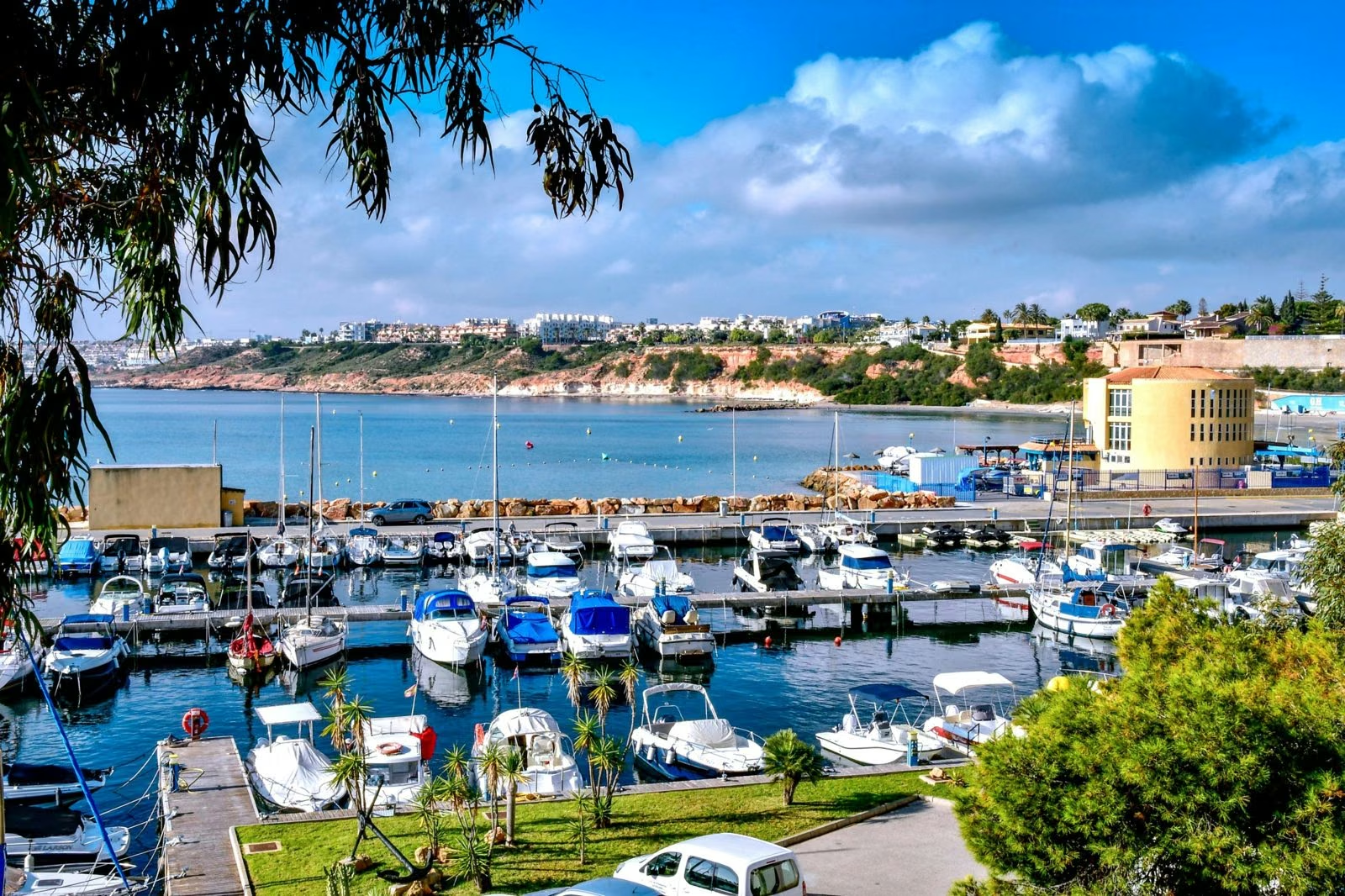
Costa Blanca Sur
Torrevieja, Orihuela Costa and La Zenia. Clear-water coves, sun almost all year round and a very lively international community.
See the area guide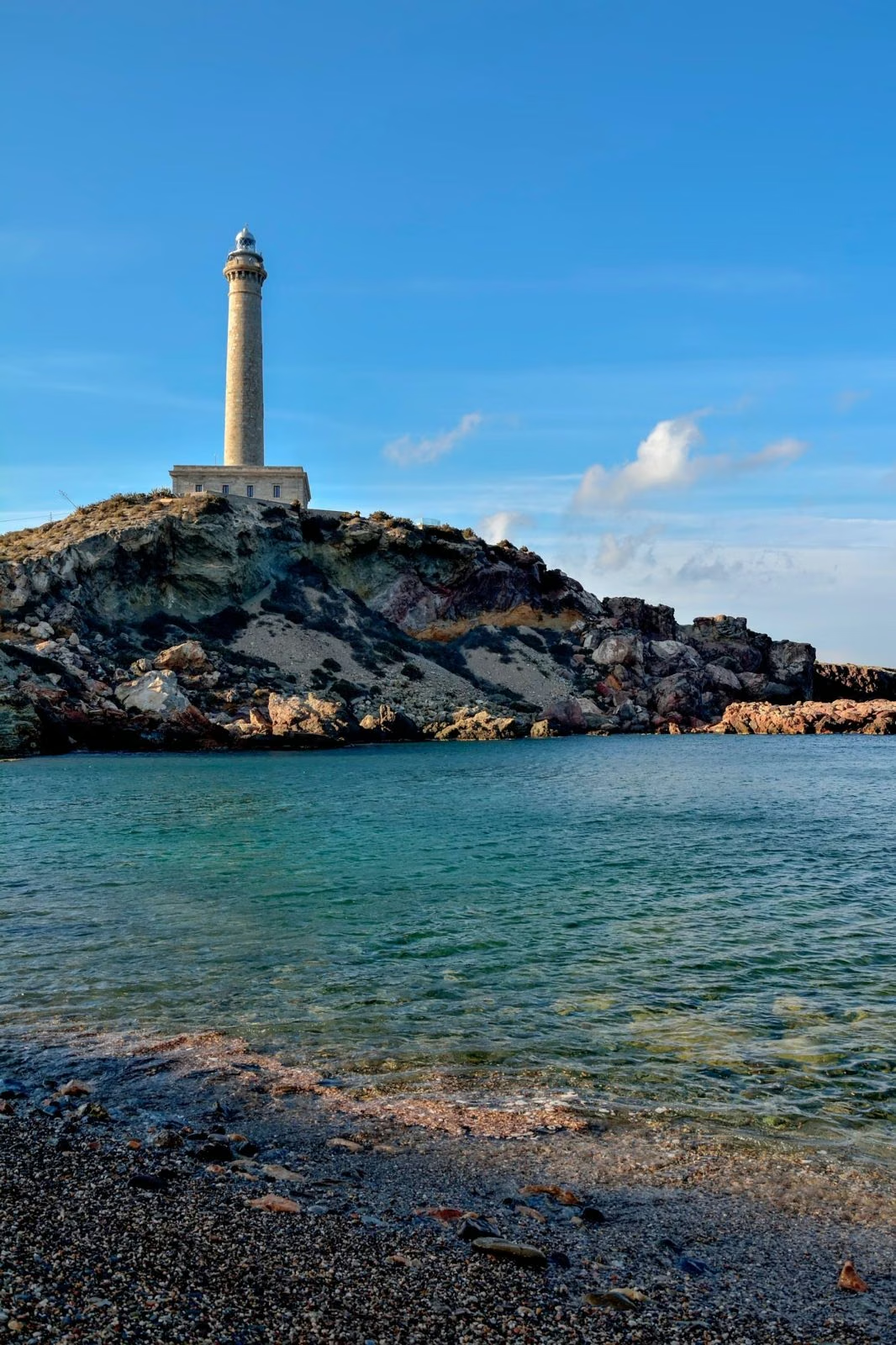
Costa Cálida
From the Mar Menor to Águilas. Golf, fishing villages and a calm sea, with Spanish character.
See the area guide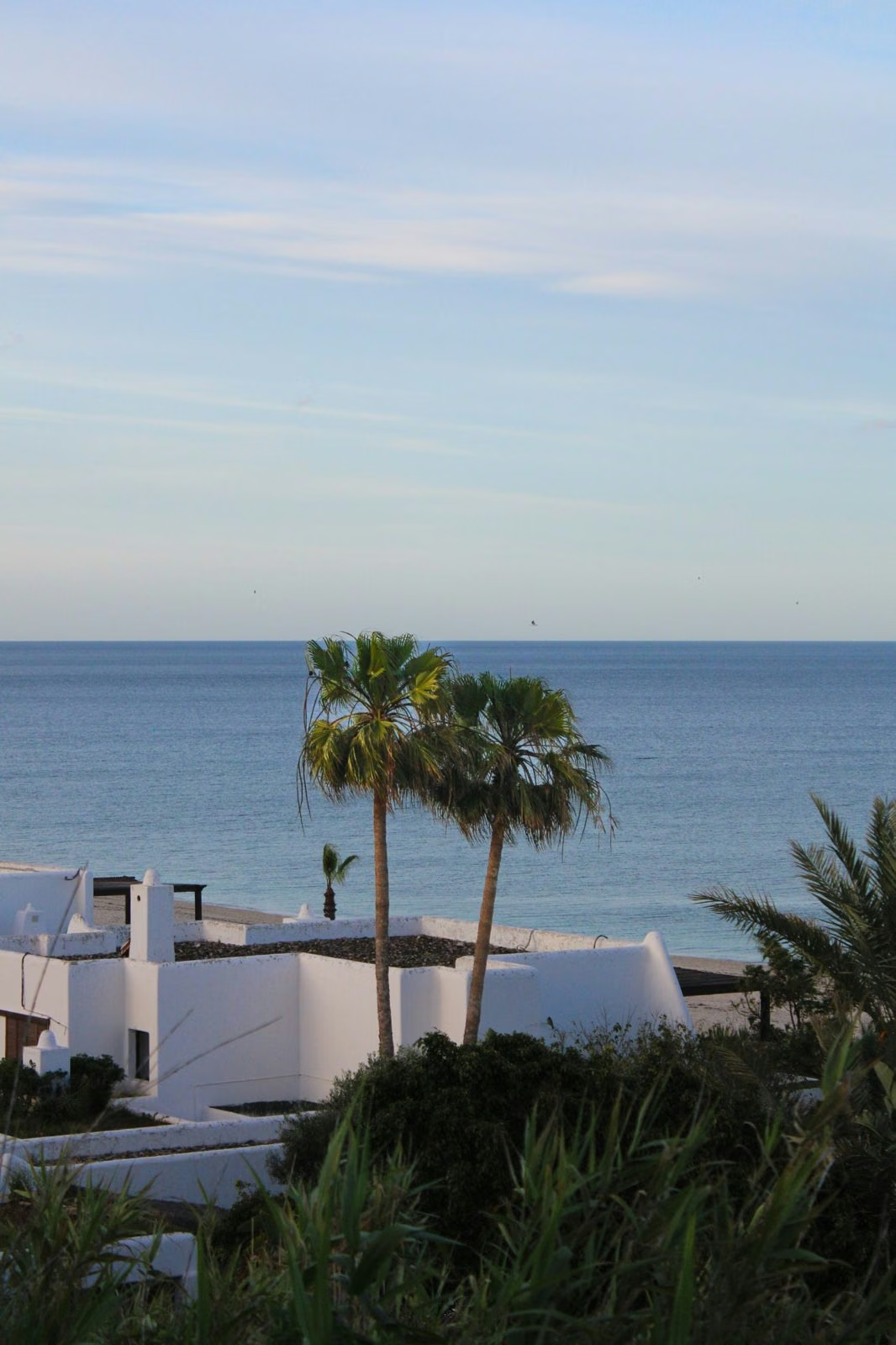
Costa de Almería
From San Juan de los Terreros to Mojácar. Long beaches, espeto beach bars and white villages.
See the area guide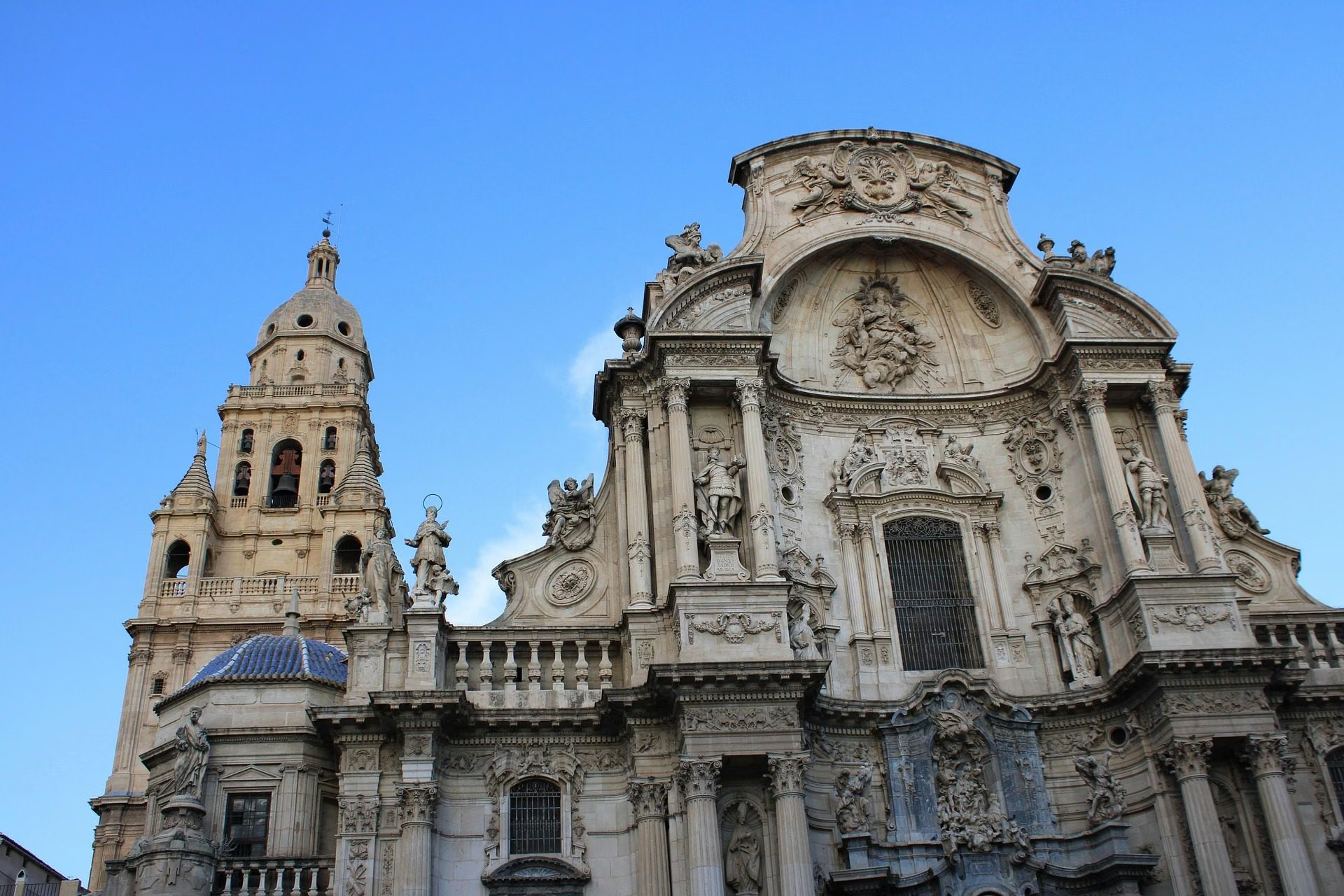
Murcia city
Centro, San Miguel and the Barrio del Carmen. A capital on a human scale, with the coast 45 minutes away.
See the area guide
Question not here? Just ask me
I answer you myself, not a form. One person from start to finish. No switchboards, no sales teams: I answer you myself, in English or Spanish, usually within two hours during working hours.